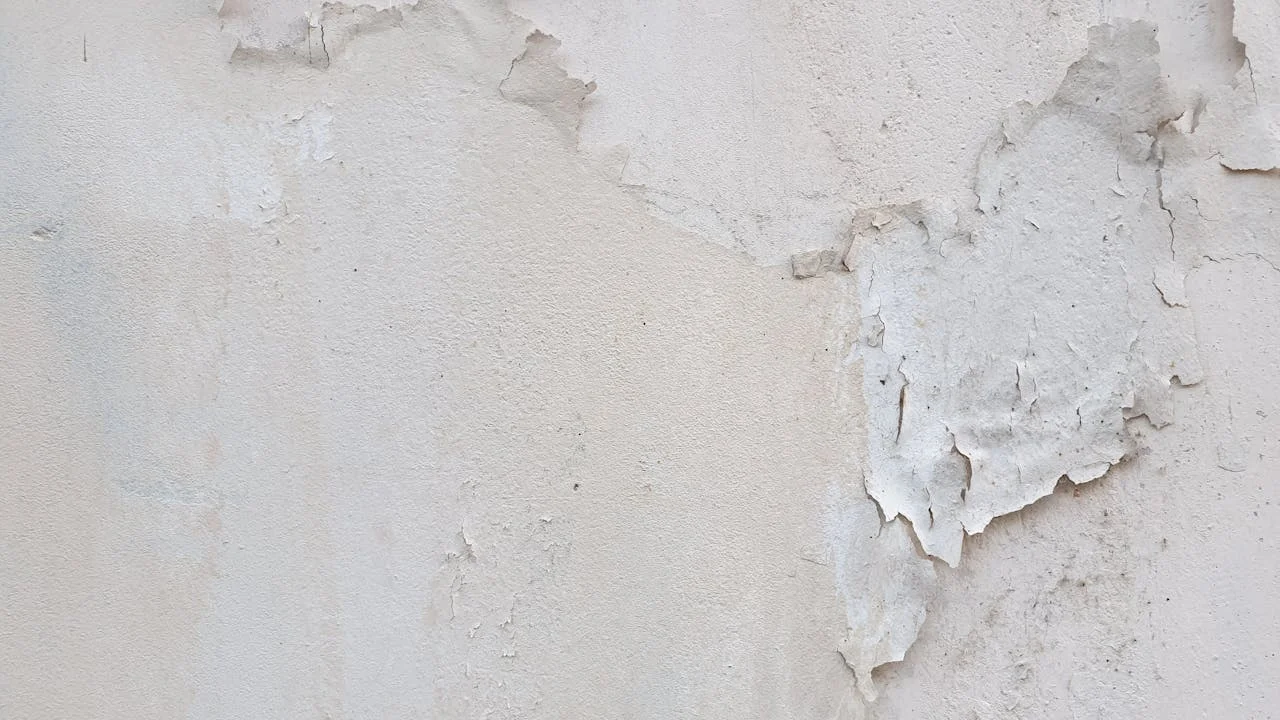
Three damp problems. Three completely different causes. Three different fixes. Get the diagnosis wrong and you'll waste thousands treating symptoms while the real issue spreads. Here's how to tell them apart.
QUICK REFERENCE · THERMAL SIGNATURE BY PATTERN
Condensation
Cool patch concentrated at corners and window reveals, fading evenly outward.
Penetrating
A narrow, irregular vertical streak tracking down from a defect above.
Rising
A horizontal cool band low on the wall, sharply cut off around a metre up.
Leak / Ingress
A tight, localised cool spot from a single point source, not a spreading pattern.
Schematic only — thermal imaging shows surface temperature differences, not moisture directly. Our surveys confirm any thermal anomaly against calibrated moisture readings before it goes in a report.
1. Rising Damp
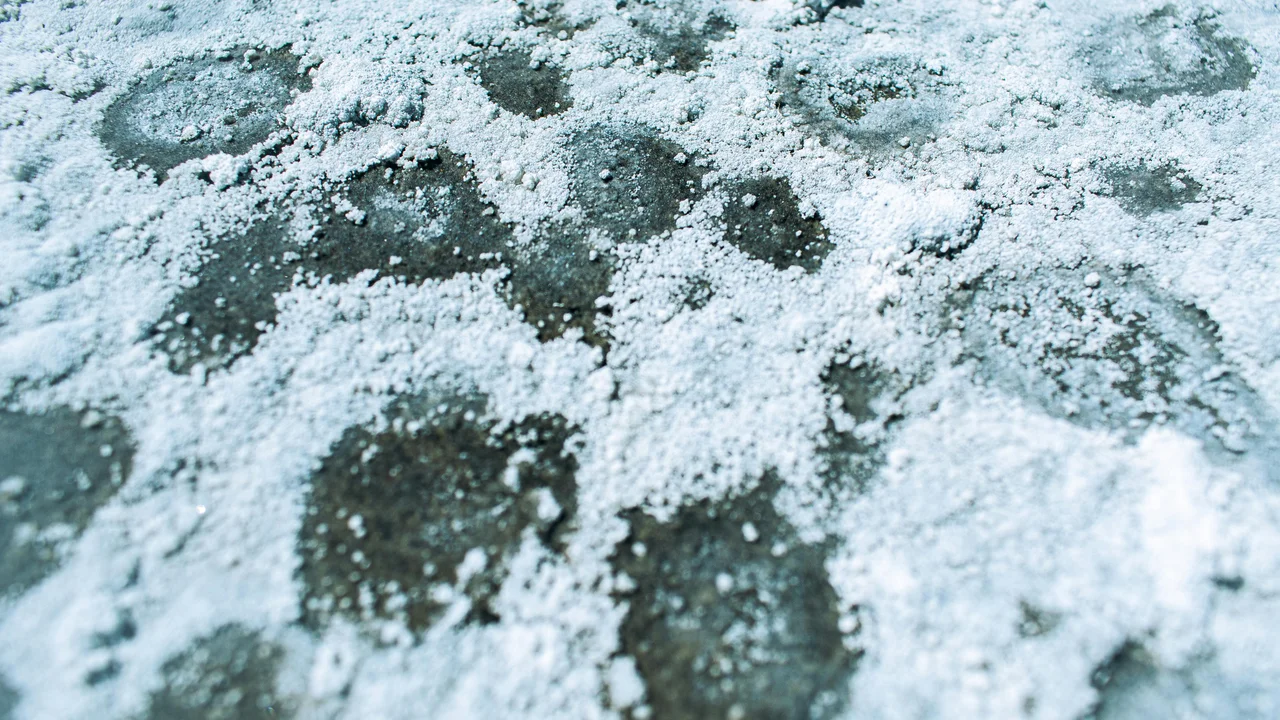
Rising damp is ground moisture travelling up through masonry by capillary action. It only affects ground-floor walls and stops at a natural ceiling height — typically 1 to 1.2 metres above the floor.
How to spot rising damp:
- • Tide marks — a horizontal line across the wall at around 1 metre
- • White salt deposits (nitrates and chlorides) on the wall surface
- • Peeling wallpaper, blown plaster, and black mould at skirting level
- • Damp patches on ground-floor walls only — never upstairs
- • Skirting boards softening or rotting
Common cause: failed or absent damp proof course (DPC), bridging of the DPC by external ground or cavity debris, or a solid floor without a damp proof membrane.
Treatment: typically a chemical DPC injection, removal of contaminated plaster, salt-resistant replastering, and sometimes lowering of external ground levels.
2. Penetrating Damp
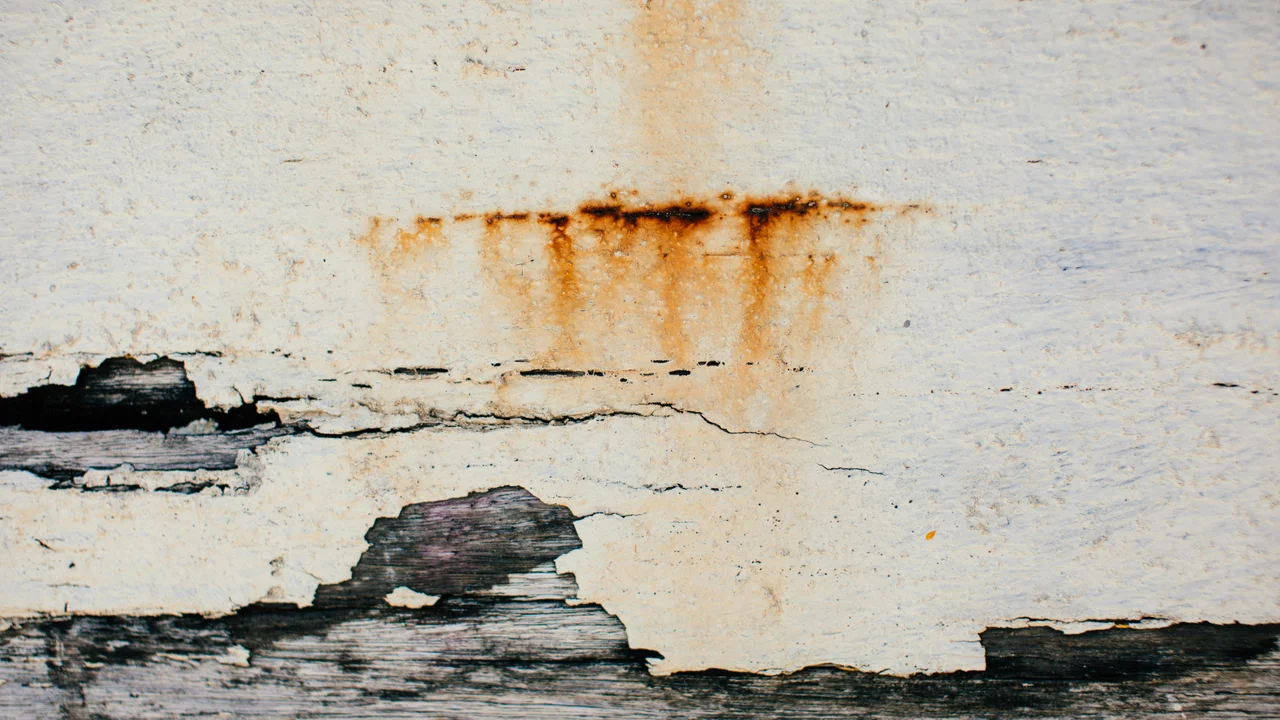
Penetrating damp is water entering the building horizontally through a defect in the building fabric — a failed render, missing pointing, a blocked cavity, a leaking gutter, or damaged flashing.
How to spot penetrating damp:
- • Damp patches appearing at any height — not just ground level
- • Patches worse after heavy rain, especially on weather-exposed walls
- • Localised wet areas rather than a continuous band
- • External defects visible nearby — cracked render, missing pointing, damaged flashing
- • Staining around window reveals, chimney breasts, or behind downpipes
Common cause: defective external render, missing mortar, damaged flashings, blocked guttering, failed sealant around windows, or missing/damaged cavity trays.
Treatment: fix the external defect first — no internal treatment will work until water ingress is stopped. Then dry the wall, replaster if needed.
3. Condensation Damp
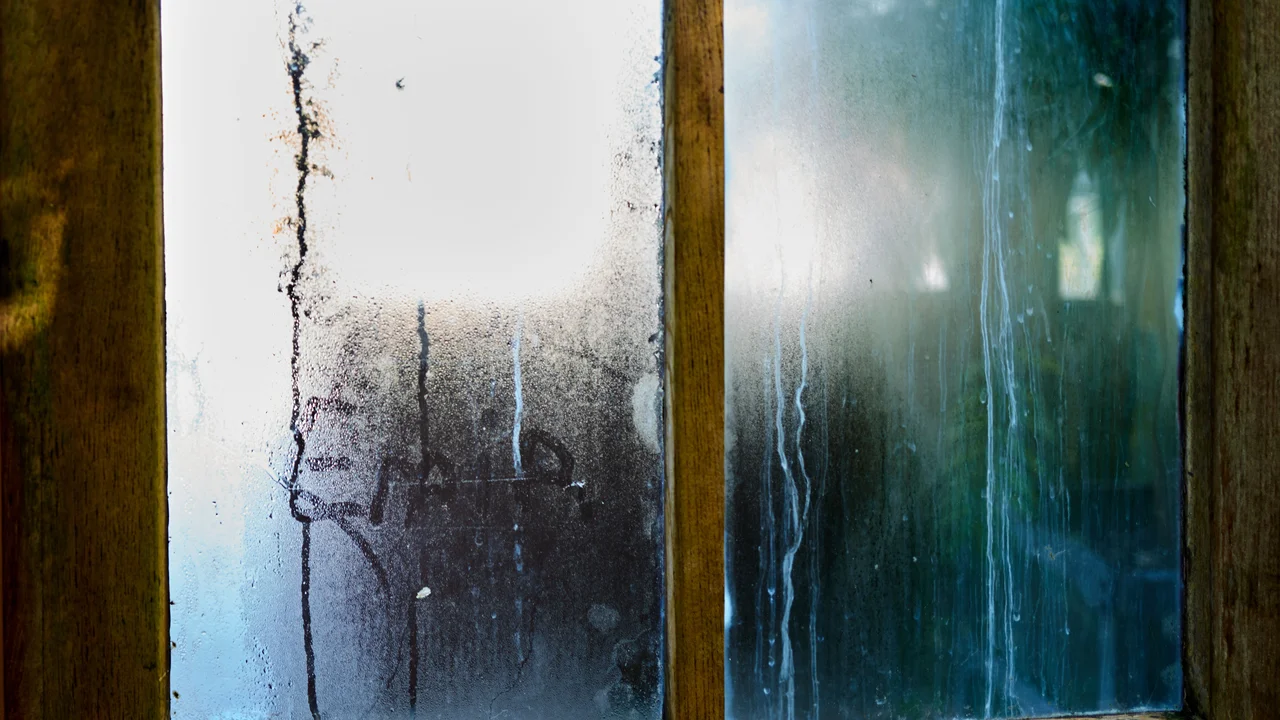
Condensation forms when warm, moist air meets a cold surface. It's the most common form of "damp" in modern UK homes and almost always the cause of black mould in bathrooms, bedrooms, and on external corners.
How to spot condensation:
- • Black mould growth (Cladosporium, Aspergillus) on walls and ceilings
- • Mould worst in cold corners, behind furniture, and on north-facing walls
- • Water droplets on windows in the morning
- • Bathroom mould on silicone sealant and tile grout
- • Musty smell in bedrooms or on soft furnishings
- • Moisture at the top of walls and on ceilings (not from the ground)
Common cause: insufficient ventilation, too much moisture production (cooking, showering, drying clothes indoors), cold wall surfaces, and thermal bridging.
Treatment: improve ventilation (mechanical extract, PIV), reduce internal humidity, address thermal bridging with insulation, antimicrobial treatment of affected surfaces.
Quick Comparison Table
| Feature | Rising | Penetrating | Condensation |
|---|---|---|---|
| Height on wall | Up to ~1m only | Any height | Often high up / corners |
| Salt deposits | Yes (nitrates) | Sometimes | No |
| Worse after rain | No change | Yes | No |
| Black mould | At skirting | At the patch | Everywhere cold |
| Location | Ground floor | Near defect | Bathrooms, bedrooms |
Why Correct Diagnosis Matters
We regularly see properties where landlords have spent thousands on chemical DPC injections — only to find the real problem was a blocked gutter or missing cavity tray. The wrong treatment wastes money and leaves the underlying issue unresolved.
A professional damp survey uses moisture meters, thermal imaging, and building pathology knowledge to correctly identify which type of damp you have. It also distinguishes between multiple causes working together — a common scenario in older properties.
FAQ · Frequently Asked
Common Questions
What's the easiest way to tell rising damp from penetrating damp?+
Rising damp only affects ground-floor walls and stops at a natural ceiling around 1 to 1.2 metres, usually with tide marks and white salt deposits. Penetrating damp can appear at any height, tends to worsen after heavy rain, and is usually linked to a visible external defect like cracked render or damaged flashing nearby.
Can a property have more than one type of damp at once?+
Yes, and it's common in older properties. A professional survey distinguishes between multiple causes working together, rather than assuming a single explanation covers everything you're seeing.
Why does condensation cause black mould specifically?+
Condensation forms when warm, moist air meets a cold surface — a window, an external wall, a poorly insulated corner. That persistent surface moisture is exactly what mould needs. It's why black mould typically appears in cold corners, behind furniture, on north-facing walls, and on bathroom silicone and grout.
What happens if I treat the wrong type of damp?+
It wastes money and leaves the real problem unresolved. We regularly see properties where landlords have spent thousands on a chemical DPC injection for rising damp, when the actual cause was a blocked gutter or missing cavity tray causing penetrating damp.
How does a surveyor tell the three types apart?+
Using moisture meters, thermal imaging, and building pathology knowledge to trace the pattern and source of the moisture, rather than judging by appearance alone — since rising, penetrating and condensation damp can look similar to the untrained eye.
