HHSRS — the Housing Health and Safety Rating System — is the legal backbone of UK housing standards. If you're a landlord, letting agent or housing officer, every enforcement notice you receive, every tenant disrepair claim, and every Awaab's Law deadline traces back to it. Here's what it actually is, in plain English.
KEY TAKEAWAY
Short answer
HHSRS is the risk-scoring system local authorities use to assess hazards — including damp and mould — in any residential property in England and Wales. A Category 1 score means the council has a legal duty to act; Category 2 means it has the power to, but no obligation. It applies to every landlord, not just social housing.
What Is HHSRS?
HHSRS stands for the Housing Health and Safety Rating System. It is the statutory risk-based assessment used by local authorities in England and Wales to evaluate the condition of residential properties under Part 1 of the Housing Act 2004.
It replaced the old binary "fitness standard" in April 2006. Rather than asking "is the property fit?", HHSRS asks how likely a hazard is to cause harm and how serious that harm would be — producing a numerical score for each of 29 specific hazards.
The 29 HHSRS Hazards

The hazards are grouped into four categories. Damp & mould is hazard number 1 — and is the most common Category 1 finding in UK private rented housing.
Physiological requirements (10 hazards)
Damp & mould growth, excess cold, excess heat, asbestos & MMF, biocides, carbon monoxide & fuel combustion products, lead, radiation, uncombusted fuel gas, volatile organic compounds.
Psychological requirements (4 hazards)
Crowding & space, entry by intruders, lighting, noise.
Protection from infection (4 hazards)
Domestic hygiene, pests & refuse; food safety; personal hygiene, sanitation & drainage; water supply for domestic purposes.
Protection from accidents (11 hazards)
Falls associated with baths; falling on level surfaces; falling on stairs; falling between levels; electrical hazards; fire; flames & hot surfaces; collision & entrapment; explosions; position & operability of amenities; structural collapse & falling elements.
Category 1 vs Category 2 Hazards

Each hazard is scored on the HHSRS matrix — likelihood of harm occurring within the next 12 months, multiplied by the severity of the most likely outcome (Class I death/permanent disability through to Class IV minor harm).
Category 1 — score 1,000+
Serious and immediate risk to health or safety. Local authorities have a legal duty to take enforcement action.
Examples: severe damp & mould affecting children, dangerous wiring, structural collapse risk.
Category 2 — score below 1,000
Lesser risk. The local authority has a power but not a duty to act.
Examples: localised condensation mould, minor trip hazards, cosmetic disrepair.
Does HHSRS Apply to Private Landlords?
Yes — to all of them. HHSRS applies to every residential property in England and Wales regardless of tenure: private rented, social rented, owner-occupied, HMOs and licensed houses. The enforcement mechanism is strongest in rented stock, where local authority environmental health teams can serve notices and levy financial penalties.
Holiday lets, static caravans on residential pitches, and social housing all fall under the same regime. The only meaningful exclusion is genuine commercial property.
Enforcement: What Local Authorities Can Do

When environmental health identifies a hazard, the toolkit available is wide and the financial consequences for landlords can be severe.
- Improvement Notice — formal notice requiring works within a defined timescale
- Prohibition Order — restricts use of part or all of the property until remedied
- Hazard Awareness Notice — formal record of a hazard, used to demonstrate the landlord was on notice
- Emergency Remedial Action — local authority carries out the work and recharges the landlord
- Civil penalties of up to £30,000 per offence
- Rent Repayment Orders — up to 12 months' rent returned to the tenant
- Banning Orders — the landlord is prohibited from letting property
- Unlimited fines through the courts for the most serious offences
How Long Does a Landlord Have to Fix an HHSRS Hazard?
There is no single fixed deadline under HHSRS itself — it depends on what enforcement action the local authority takes. Where an Improvement Notice is served, the Housing Act 2004 sets a statutory minimum: remedial work cannot be required to start any earlier than 28 days after the notice is served (21 days if the notice was previously suspended). The notice itself then specifies the period allowed to complete the work, which the local authority sets based on the severity of the hazard.
That 28-day minimum is a general HHSRS rule and applies case-by-case. It is not the same as the fixed working-day windows introduced by Awaab's Law, which currently apply specifically to damp and mould hazards in social housing — see below.
HHSRS and Awaab's Law
Awaab's Law (in force October 2025 for social housing in England) does not replace HHSRS — it sits on top of it. HHSRS gives local authorities the framework to identify a hazard; Awaab's Law sets the response timescales.
Practically, this means a damp & mould complaint to a social landlord must now be investigated within 10 working days, with emergency hazards investigated and made safe within 24 hours, and repairs on non-emergency (significant) hazards beginning within 5 working days of the investigation — or physically starting within 12 weeks if that isn't achievable. The Renters' Rights Act 2025 gives government the power to extend equivalent obligations to private landlords. Read more in our guide to Awaab's Law for Lincolnshire landlords.
How HHSRS Inspections Work
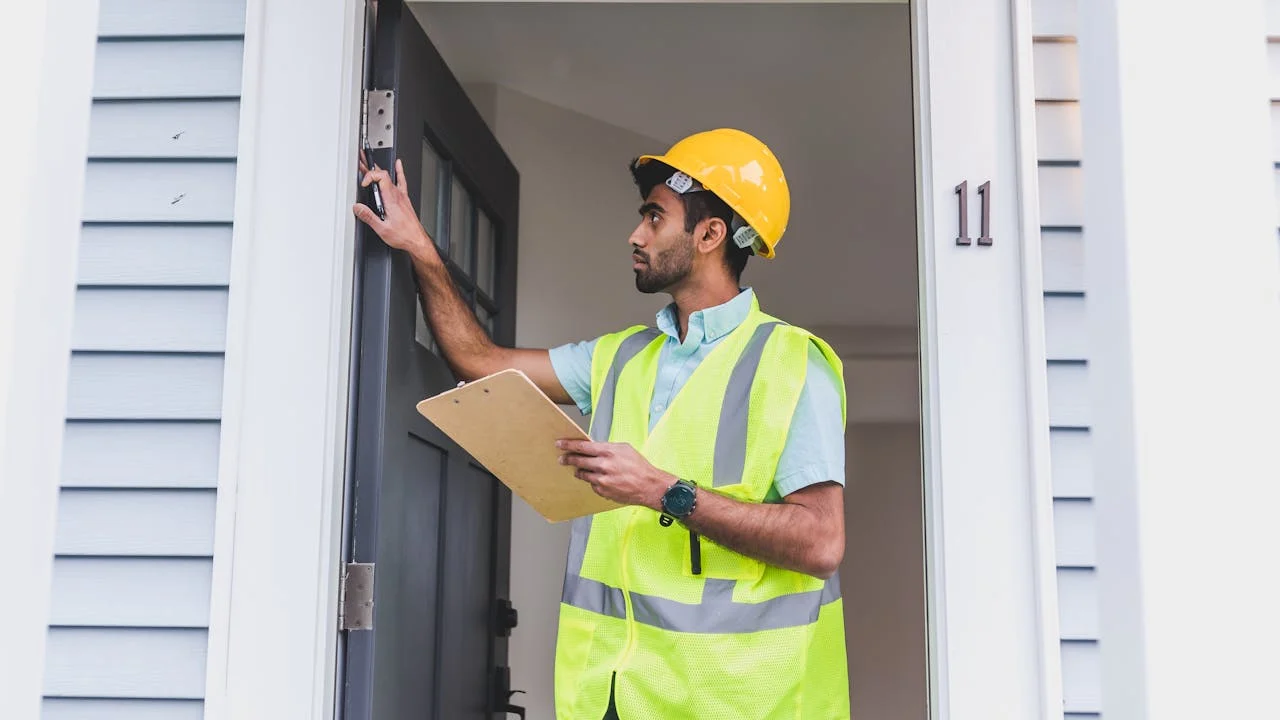
Statutory HHSRS inspections are carried out by local authority environmental health officers — usually triggered by a tenant complaint, a council housing survey, or a referral from another agency. Independent surveyors (such as ourselves) carry out privately commissioned HHSRS-compliant inspections for landlords who want documented evidence ahead of any enforcement.
Inspection
The surveyor walks the property, identifies and rates each of the 29 potential hazards using the HHSRS matrix, and records evidence with photographs, moisture readings, thermal imaging and air quality data where relevant.
Scoring
Each identified hazard is assigned a likelihood and a severity score. The combined score determines whether it is Category 1, Category 2, or below the threshold for action.
Report
A written HHSRS-compliant report sets out each hazard, its rating, the underlying cause, and the recommended remedial action — including timescales and priority.
Action plan
For landlords, the report acts as a defensible audit trail. Carrying out the recommended works on time is the strongest evidence of compliance with HHSRS, the Homes (Fitness for Human Habitation) Act 2018 and Awaab's Law.
How We Can Help
We provide independent HHSRS-compliant damp & mould surveys for landlords, letting agents and housing associations across Lincoln, Lincolnshire, Gainsborough, Newark, Sleaford and Grantham. Each report identifies hazards on the HHSRS matrix, photographs and documents the evidence, and sets out a prioritised remediation plan.
For routine monitoring, our Mould Report from £100+VAT is the most cost-effective starting point. For full enforcement-ready documentation, the £250+VAT Comprehensive Survey is the standard product.
Putting HHSRS Into Practice
Most enforcement action under HHSRS in 2026 will involve damp, mould or both, particularly under the new Awaab's Law timeframes that took effect in October 2025. Social landlords and housing associations are already operating under the statutory 10-working-day investigation window — and the Renters' Rights Act 2025 gives government the power to extend the same regime to private rented stock, though that extension is not yet in force. If you're a private landlord in Lincolnshire, an HHSRS-compliant baseline survey is the simplest, lowest-cost form of protection — and the documentation Category 1 enforcement officers expect to see.
BOOK A SURVEY · LINCOLN & LINCOLNSHIRE
Get an HHSRS-rated report before it becomes a complaint.
Independent damp and mould surveys from £100+VAT, HHSRS-rated and delivered within 48-72 hours, covering Lincoln, Gainsborough, Newark, Sleaford and Grantham.
Book Your SurveyFAQ · Frequently Asked
Common Questions
What is HHSRS?+
HHSRS stands for the Housing Health and Safety Rating System. It is the statutory risk-based assessment system used by local authorities in England and Wales to evaluate the condition of residential properties under the Housing Act 2004. It assesses 29 potential hazards and rates each as Category 1 (most serious) or Category 2 (less serious).
What does HHSRS stand for?+
HHSRS stands for Housing Health and Safety Rating System. It replaced the old Housing Fitness Standard in April 2006 and is the legal basis on which environmental health officers and surveyors assess hazards in homes.
What are the 29 HHSRS hazards?+
The 29 hazards are grouped into four categories: Physiological (damp & mould, excess cold, excess heat, asbestos, biocides, carbon monoxide, lead, radiation, uncombusted fuel gas, volatile organic compounds), Psychological (crowding & space, entry by intruders, lighting, noise), Protection from Infection (domestic hygiene & pests, food safety, personal hygiene & sanitation, water supply) and Protection from Accidents (falls, electrical, fire, flames, collision, explosion, position & operability, structural collapse).
Does HHSRS apply to private landlords?+
Yes. HHSRS applies to all residential rented housing in England and Wales — private landlords, social landlords, housing associations and HMOs. Local authorities have a statutory duty to take enforcement action against Category 1 hazards in any tenure.
Is HHSRS a legal requirement?+
Yes. HHSRS is set out in the Housing Act 2004 and is enforced by local authority environmental health teams. Failure to remedy a Category 1 hazard after an Improvement Notice can result in unlimited fines, civil penalties up to £30,000 per offence, banning orders, and Rent Repayment Orders.
What is the difference between Category 1 and Category 2 hazards?+
Category 1 hazards score 1,000 points or more on the HHSRS scoring matrix and represent a serious and immediate risk to health or safety. Local authorities have a legal duty to act on Category 1 hazards. Category 2 hazards score below 1,000 points and represent a lesser risk; the authority has a power but not a duty to act.
Who is responsible for HHSRS inspections?+
Local authority environmental health officers carry out statutory HHSRS inspections following a tenant complaint or proactive housing survey. Landlords can also commission private HHSRS-compliant inspections from independent surveyors to demonstrate compliance, manage risk, and pre-empt enforcement action.
